Q&A
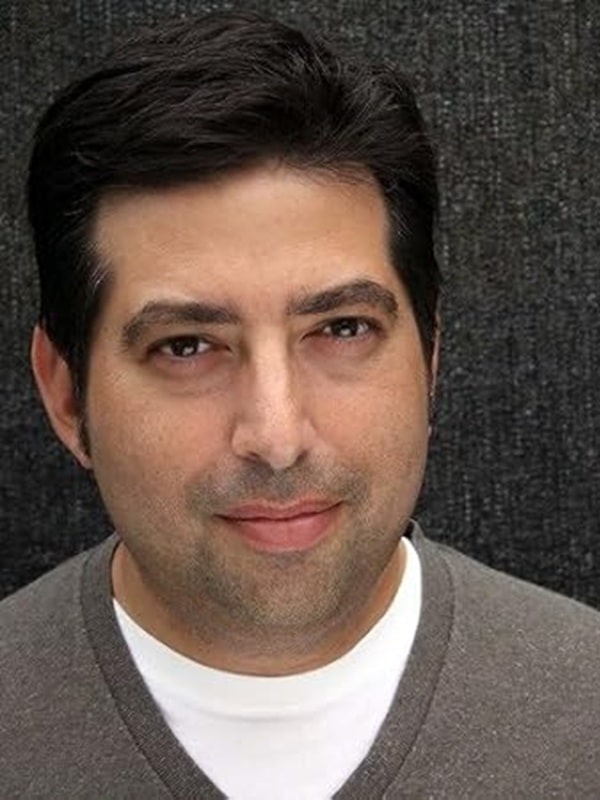
Tod Goldberg
Tod Goldberg is the New York Times bestselling author of over a dozen books of fiction, including The Low Desert: Gangster Stories, Gangsterland, a finalist for the Hammett Prize, Gangster Nation, The House of Secrets, which he co-authored with Brad Meltzer, and Living Dead Girl, a finalist for the Los Angeles Times Book Prize. His essays, nonfiction, and criticism appear widely, including in the Los Angeles Times, USA Today, and Wall Street Journal, as well as Best American Essays, and have earned five Nevada Press Association Awards. He is also the cohost, along with Rider Strong and Julia Pistell, of the popular podcast Literary Disco. Goldberg is a Professor of Creative Writing at the University of California, Riverside, where founded and directs the Low Residency MFA program in Creative Writing & Writing for the Performing Arts.
Q: Can you tell us what Only Way Out is about in two to three sentences?
Tod: It’s about the great expectations and ultimate failures of two small-town, exceedingly smart siblings. It’s about a con man trying to keep his secrets. It’s about a corrupt cop, who it seems might have a prostate infection, who finds a van full of stolen loot and a dead body and makes all the wrong decisions. It’s about a dying resort town…that comes alive for all the wrong reasons. It’s about bad people doing bad things to worse people.
Q: What were your inspirations/influences for this storyline?
Tod: A relative of mine told me about a law firm where he was working for the summer that had an entire floor of safe deposit boxes. That one little detail turned on all the wrong instincts in my brain, namely: What’s in all those boxes…and what could be gained from heisting them?
I’m also a pretty avid consumer of true crime, which often makes me feel a little gross, and so I wanted to examine what might happen to a small town that finds itself embroiled in a DB Cooper-level heist, where the presumed criminal becomes a folk hero…and then take that to an extreme. And of course, I always like to write about people who are pushed into a corner and forced to make usually bad decisions.
Also, after spending over a decade writing a series of novels that are deeply intertwined, with several far-reaching conspiracies and winding narratives, I really wanted to write a novel that was self-contained, dark, weird, and funny. Hopefully I achieved a few of these goals.
Q: Were there any unexpected surprises or challenges when you were researching and writing the book?
Tod: Well, the honest truth is that I wrote this book primarily sitting in waiting rooms while my wife Wendy got chemotherapy and radiation, so in a very real sense diving into this world was my primary distraction from the anxiety and fear you have when the person you love is sick. Wendy received a clean bill of health in November of 2024…and I finished the book a month later. That was an experience I do not wish to replicate, as you might imagine, but I am thankful that my life of writing books gave us the opportunity to get Wendy the best care.
Q: Tell us about Granite Shores—was there a real place that inspired this “dying resort town.”
Tod: Granite Shores is an amalgamation of several places: Capitola and Pajaro Dunes, CA, where I spent a lot of time as a kid. Loon Lake, WA, where I spent every summer up through my early twenties fishing with my siblings and cousins. Palm Springs, CA, where I live and which is a resort town that’s not dying, but which surely contains some secrets, and Seaside, OR, where my grandparents had a condo a million years ago, and which lives on in my mind as the quintessential summer town, right down to the Pronto Pups. And then of course, I just made a bunch of stuff up, too. I love writing about shitty resorts. There’s something inherently dark about a place where people are paid to pretend they like you.
Q: There are a lot of “bad guys” in your book, as there are in your previous work. How do you write this kind of character so that readers find them so appealing?
Tod: I try to find something empathetic about them, so that even a character like Jack Biddle – the corrupt cop – gets rendered truthfully but not without an understanding of why he’s so pathetic and petty. He makes sense, even if it’s bad sense, and I think readers like to see someone who is rounded vs being a straight up villain. Very few people view themselves as anything other than the hero, so it’s fun for me to write characters that all believe they’re the main character, and then slowly take them down a notch. Or five. I guess in one way I’m really writing about people who believe they are competent who run headlong into people who actually are competent and how the invariably turns south.
Q: Your mix of dark comedy, crime fiction, and philosophical musings is unique. How do you balance humor with violence and introspection?
Tod: In order to stay relatively sane, I think I end up viewing the world as an absurd place, which allows me to make some sense of it on a human level, day by day. This naturally bleeds into my work. And maybe if I were a different kind of writer, this would manifest itself as funny family dramas, but, alas, I write crime fiction. That said, I try not to make the violence in my books cartoonish – I want it to seem visceral and real, which means it’s messy and the people perpetrating violent crimes are not unchanged by the experience. So that tends to lead to spiritual or philosophical reckoning, which can be serious or deeply fucked up. I tend toward deeply fucked up.
Q: Dialogue is a strong element in your books. Do you have a specific process for crafting voices that feel both gritty and believable?
Tod: I spend a lot of time listening to the way people talk. People reveal a lot about themselves if you pay attention, so I try to do that with my characters, too.
Q: Can you give us a sneak peek of your next book?
Tod: Oh, you know, bad people doing crimes. But at the Salton Sea, in the 1960s.
Tod Goldberg's Latest

Only Way Out
Failed lawyer Robert Green has such a good plan: Crack three hundred safe-deposit boxes and sail off to South America with his brilliant, morally flexible sister, Penny. If it weren’t for the damned freezing rain.
In the dying resort town of Granite Shores, cop Jack Biddle is self-appointed king—mostly of bad decisions. Between his family’s crumbling legacy, a wife who just joined the city council, and life-threatening gambling debts, Jack’s looking for a way out. Then he spots a van spinning off a mountain road into the valley below. In the wreckage, Jack finds a very dead Robert, millions in heisted loot…and opportunity.